Renovation for Resale in Dubai: What Actually Increases Value (and What Quietly Works Against You)
Tips
Feb 9, 2026
3 Min Read
At some point, many property owners in Dubai arrive at the same question: “If I renovate now, will I actually get that money back when I sell?”. It’s a reasonable question—and one that is often answered poorly. Online advice tends to be either overly optimistic (“renovate everything, buyers love it”) or overly cautious (“don’t touch anything, let the buyer decide”). The reality sits somewhere in between.



Renovation for resale in Dubai is not about making the property beautiful. It is about reducing buyer hesitation, removing friction, and making the property easier to say yes to—without spending in ways the market will not recognise.
This article explains how resale-focused renovation really works in Dubai, what buyers subconsciously respond to, where owners unintentionally lose money, and how professionals approach resale projects with restraint and strategy.
How Resale Renovation Usually Works in Dubai (The Real Market Context)
Dubai’s resale market is highly comparative. Buyers rarely look at one property in isolation. They compare:
similar layouts in the same building or community
price per square metre
condition and perceived age
readiness for immediate use
In most segments, buyers are not looking for “their dream home.” They are looking for clarity and confidence:
Can I move in without disruption?
Will this property require hidden spending?
Does it feel maintained and reliable?
Renovation for resale, therefore, is less about style and more about trust signals.
The Biggest Misconception: “Renovation = Higher Price”
Renovation does not automatically increase resale value. In fact, poorly targeted renovation can make a property harder to sell.
The key distinction is this:
Buyers pay more for certainty, not for personal taste.
A renovated property that feels opinionated, overly customised, or expensive to maintain can actually narrow the buyer pool.
What Buyers in Dubai Actually Notice (Even If They Don’t Say It)
1. Perceived Age
Buyers are highly sensitive to how “old” a property feels, regardless of actual age. Certain elements age properties faster than others:
bathrooms
kitchens
flooring condition
lighting quality
These areas disproportionately influence buyer perception.
2. Maintenance Signals
Buyers notice signs of neglect quickly:
uneven AC cooling
visible patchwork repairs
water pressure inconsistencies
misaligned doors or cabinetry
These signals suggest future hassle, even if the property is structurally sound.
3. Layout and Flow
Even without technical language, buyers feel when a space flows poorly. Awkward furniture placement, tight circulation, or wasted zones reduce emotional comfort.
4. Cleanliness vs Finish Quality
A clean, neutral, well-maintained property often outperforms a “luxury” one that feels overworked or cluttered.
What People Commonly Get Wrong When Renovating for Resale
Mistake 1: Designing for Themselves, Not the Market
Owners often renovate based on personal preferences accumulated over years of living in the space. Buyers, however, see the property for 15 minutes.
Strong personal expression can limit appeal.
Mistake 2: Overcapitalising
Spending at a luxury level in a mid-market building rarely returns value. Buyers compare against similar units, not against design magazines.
Mistake 3: Ignoring Bathrooms
Bathrooms carry more resale weight than many owners realise. A dated bathroom can negate multiple upgrades elsewhere.
Mistake 4: Leaving Technical Issues Untouched
Cosmetic upgrades cannot hide system problems. Buyers notice inconsistent cooling, noise, or plumbing issues quickly.
Mistake 5: Partial Renovation Without Logic
Renovating one area to a high standard while leaving adjacent areas untouched creates imbalance and raises questions.
How Professionals Approach Renovation for Resale
Experienced teams treat resale renovation as a risk management exercise, not a design project.
Step 1: Market Positioning Analysis
Before touching the property, professionals assess:
building age and category
recent transaction benchmarks
buyer expectations in that segment
The renovation scope is aligned to the median buyer, not the most enthusiastic one.
Step 2: Friction Removal
The focus is on eliminating objections:
technical reliability
visible wear
layout inefficiencies
maintenance concerns
Anything that causes a buyer to pause is addressed.
Step 3: Neutral, Durable Design Language
Design choices aim to:
feel current but not trendy
photograph well
age slowly
appeal across demographics
This increases buyer pool size.
Step 4: Budget Discipline
Spending is capped where the market will not reward additional investment. Professionals are comfortable not upgrading certain areas if ROI is weak.
Where Renovation for Resale Usually Pays Off
1. Bathrooms
Often the strongest ROI.
clean lines
neutral tiles
good lighting
reliable fixtures
Buyers equate new bathrooms with lower future spending.
2. Kitchen Refresh (Not Full Redesign)
A full kitchen rebuild is not always necessary. Often effective:
new fronts
updated worktops
improved lighting
modern hardware
This creates a “new enough” impression without overspending.
3. Flooring Consistency
Mismatched or worn flooring is a red flag. Consistent flooring creates visual calm and makes spaces feel larger.
4. Lighting
Lighting affects photos, viewings, and perceived quality more than most upgrades. Neutral, well-balanced lighting is critical.
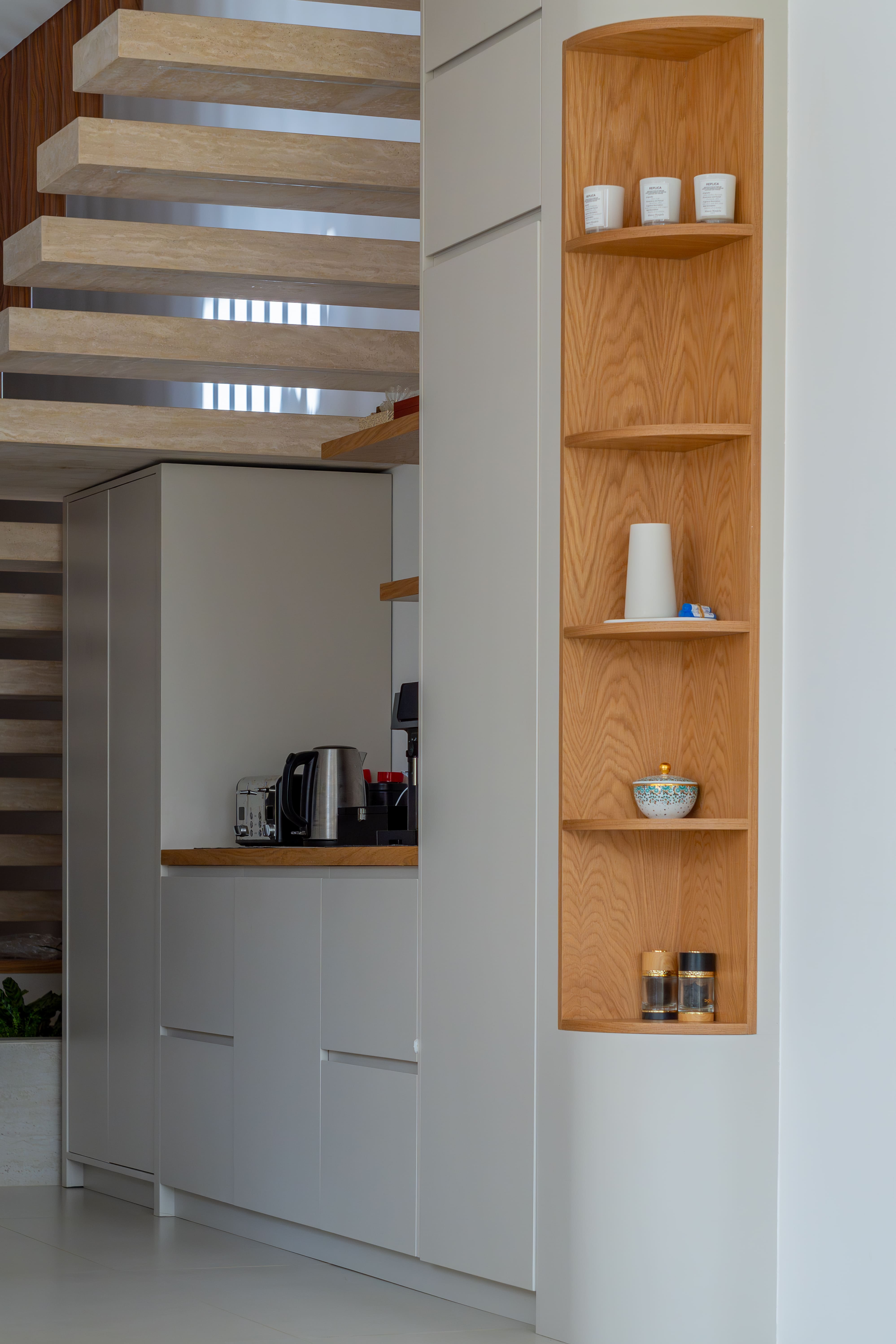
5. Minor Joinery for Storage
Strategic built-in storage can improve usability without imposing style.
Where Renovation for Resale Rarely Pays Off
highly personalised finishes
rare or fragile materials
complex smart systems
over-designed feature walls
niche colour palettes
These narrow appeal and raise maintenance questions.
Practical Dubai Scenarios
Scenario A: Apartment in a High-Supply Area
Goal: stand out without overspending
Strategy: bathroom refresh, lighting upgrade, neutral finishes
Outcome: faster sale, cleaner negotiation
Scenario B: Older Apartment in Prime Location
Goal: justify price through condition
Strategy: address systems, simplify layout, modernise bathrooms
Outcome: buyer confidence despite age
Scenario C: Villa Resale
Goal: reassure buyers about scale and maintenance
Strategy: neutral interiors, functional outdoor spaces, clear zoning
Outcome: broader buyer interest
Renovation vs Fit-Out for Resale
In many cases, fit-out-level upgrades are sufficient for resale:
finishes
lighting
storage
minor layout adjustments
Full renovation is only justified when technical issues would otherwise deter buyers.
Maintenance Before Resale: Often Overlooked, Always Noticed
A maintenance review before listing:
reduces viewing objections
prevents last-minute negotiation leverage
signals responsible ownership
Small fixes often protect price more effectively than major upgrades.
A Simple Decision Framework for Owners
Before renovating for resale, ask:
Will this reduce buyer hesitation?
Will the market recognise this spend?
Does it improve reliability or clarity?
Would I notice this during a 15-minute viewing?
If the answer is no, reconsider.
FAQs
1. Does renovation always increase resale value in Dubai?
No. Only targeted renovation aligned with market expectations tends to improve outcomes.
2. What is the best first area to renovate for resale?
Bathrooms usually offer the strongest return relative to cost.
3. Should I renovate fully or partially before selling?
Partial, strategic upgrades often perform better than full renovations.
4. Can over-renovation hurt resale?
Yes. Overcapitalisation can reduce buyer pool and slow sales.
5. Do buyers prefer renovated or original properties?
They prefer clarity—either clearly renovated or clearly priced for renovation.
6. Is neutral design always better for resale?
In most cases, yes. It broadens appeal and reduces objections.
7. Should I do maintenance before listing?
Absolutely. Maintenance signals care and reduces negotiation pressure.
Renovation for resale in Dubai is not about impressing buyers. It is about removing reasons for them to hesitate.
When done with restraint, market awareness, and technical clarity, renovation becomes a quiet but powerful tool—one that supports value rather than gambling with it.


Similar Topic